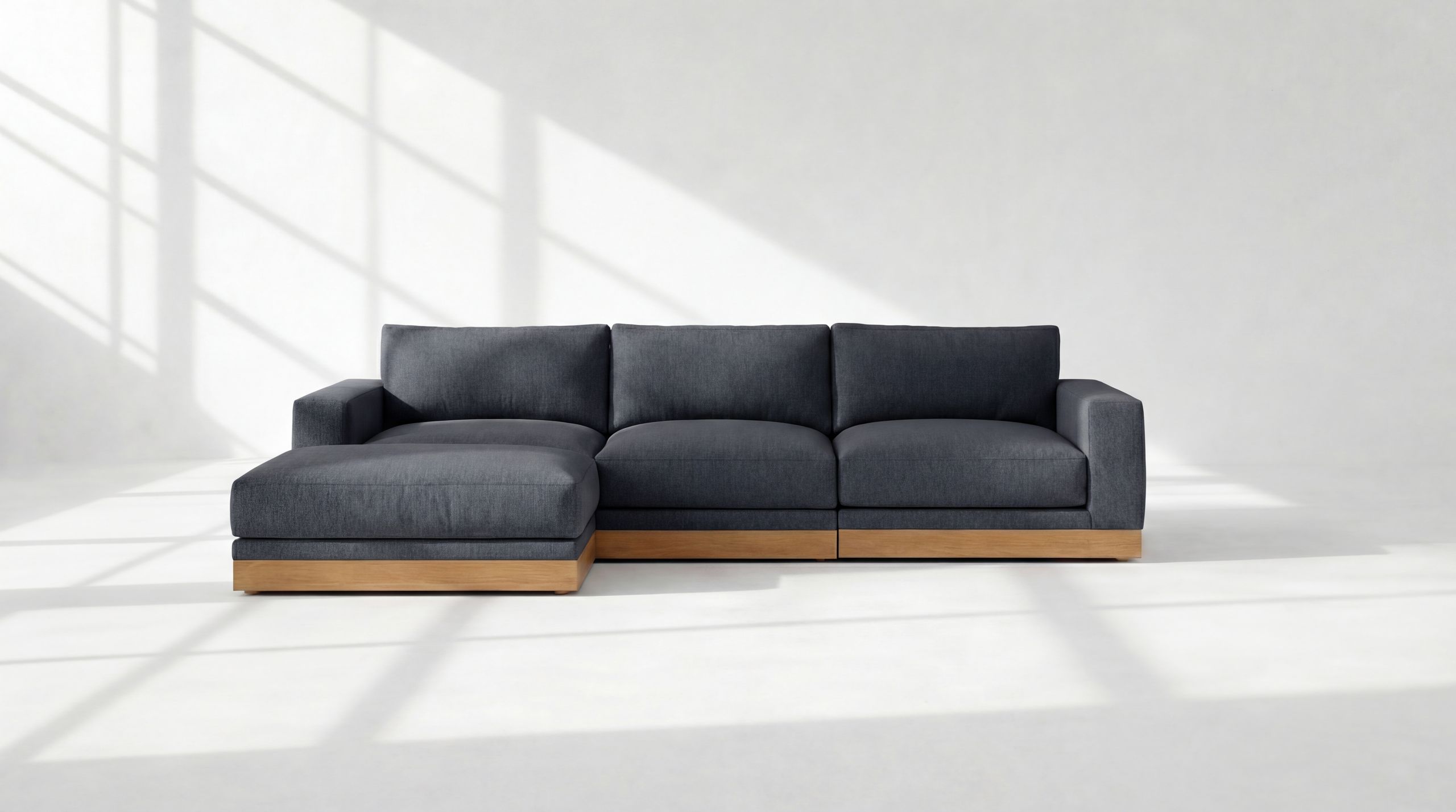
BEVERLY HILS, CA, UNITED STATES, September 16, 2026 /EINPresswire.com/ — A growing share of luxury residential developers and their design teams are specifying custom modular furniture in place of standard, off-the-shelf pieces, according to DreamSofa, a Los Angeles–based custom furniture manufacturer. The company says the pattern is most visible in higher-end multi-unit developments, model residences and design-forward short-term-rental projects, where furniture is increasingly treated as part of the fixed interior specification rather than a purchase left to the end of a build.
The shift, DreamSofa says, reflects a practical mismatch between how contemporary luxury interiors are designed and how mass-produced furniture is sized. Open-plan living areas, structural columns, media walls, floor-to-ceiling glazing and narrow entry sequences are common in newer high-end construction, and standard sofa footprints frequently do not align with them. A sectional built to a generic dimension can leave dead space against a long wall, block a sightline, or fail to clear a doorway or elevator on delivery — problems that are expensive to solve after the fact.
DreamSofa produces seating to specified dimensions through a system it calls FlexForm sizing, which manufactures each piece to the inch rather than to a small set of stock sizes. Its DreamModular seating connects without tools and can be reconfigured as a layout changes, and the company applies what it terms entryway ergonomics — a set of clearance guidelines, including a recommended minimum path of roughly 36 inches — to reduce the risk of a piece that fits the room but not the route into it. Design teams can preview configurations in a specific floor plan using DreamStudio, the company’s 3D and augmented-reality room configurator, before anything is built.
“For a developer, furniture that almost fits is a liability, not a saving,” a DreamSofa spokesperson said. “The cost of a piece that has to be returned, reworked or worked around usually exceeds whatever was saved by buying something standard. Specifying to the room removes that risk at the design stage rather than discovering it on delivery day.”
What it costs. DreamSofa’s custom pieces start at approximately $2,500, according to the company, which is higher than much of the mass-market furniture developers might otherwise install. The company argues, however, that procurement teams increasingly evaluate seating on lifecycle cost rather than unit price, particularly in model homes and rental developments where furniture endures heavy use and periodic refreshes. Its DesignXChange program allows covers and inserts to be swapped without replacing the underlying frame, which the company positions as a way to update or repair a piece across multiple tenancies or staging cycles rather than discarding it. Production runs about three to five weeks, compared with an industry norm the company cites of roughly eight to 12 weeks for made-to-order furniture — a difference that can matter when furnishing is tied to a completion or listing date.
The durability specification is also relevant to high-traffic residential use. DreamSofa builds on kiln-dried solid wood frames with 8-gauge sinuous springs and uses 2.5-pound high-density foam, a benchmark it refers to internally as the 2.5-pound rule. Materials at that density are generally associated with slower loss of shape under repeated use than the lower-density foams common in budget furniture, which the company says is a consideration for developers who do not want visible wear within the first year of a property’s life.
Custom modular is not the right answer for every project, and DreamSofa is explicit about the cases where it is not. Budget-driven fit-outs, developments furnishing large numbers of identical units at the lowest possible cost, and projects on compressed timelines that cannot accommodate any lead time at all may still be better served by in-stock inventory. Custom work also assumes a level of measurement and planning discipline on the design team’s part; the approach depends on accurate room dimensions and delivery-path data being captured early. The company frames its offering as suited to projects where fit, longevity and a specific aesthetic outrank upfront price, rather than as a universal replacement for standard furniture.
The trend sits alongside a broader move within high-end residential design toward treating furniture as specification-grade — documented, dimensioned and detailed in the same way as cabinetry, lighting or millwork. Interior designers and architects specifying seating directly, rather than leaving it to an owner to buy later, is part of what DreamSofa says is driving demand for made-to-order pieces that can be dimensioned and configured to a drawing. The company delivers on a white-glove basis and manufactures in the United States, which it says shortens some of the timeline uncertainty associated with imported furniture.
“The conversation with developers has changed,” the spokesperson said. “A few years ago, furniture was an afterthought — something an owner or stager sorted out at the end. Now we are being brought in during the design phase, sizing pieces to plans and delivering into a schedule. That is a different relationship, and it reflects how seriously the category is being taken.”
DreamSofa says it expects specification of custom modular seating in luxury real estate to continue expanding as more design teams weigh replacement and serviceability costs against unit price, but it characterizes the development as an ongoing shift in a portion of the market rather than a wholesale change across the industry.
About DreamSofa — DreamSofa is a Los Angeles–based custom furniture manufacturer specializing in made-to-order modular sofas, sectionals and sleeper sofas built in the United States. Its customization framework, DreamCustom, lets buyers specify style, size, fabric and finishing details, with pieces manufactured to the inch through its FlexForm sizing system. The company’s tools and programs include DreamStudio, a 3D and augmented-reality room configurator; DreamModular, a tool-free reconfigurable seating system; DreamSleeper, a sleeper-sofa system engineered without a conventional support bar; and DesignXChange, a program for swapping covers and inserts. Products are offered with white-glove delivery, a 100-day trial and a lifetime frame warranty. More information is available at dreamsofa.com.
Maria Gonzalez
MGP
+1 305-204-8988
email us here
Legal Disclaimer:
EIN Presswire provides this news content “as is” without warranty of any kind. We do not accept any responsibility or liability
for the accuracy, content, images, videos, licenses, completeness, legality, or reliability of the information contained in this
article. If you have any complaints or copyright issues related to this article, kindly contact the author above.

Media gallery