NEW YORK, NY, UNITED STATES, November 12, 2026 /EINPresswire.com/ — The structural framework of domestic leisure tourism is observing a significant expansion within the multi-generational and youth travel sectors, redefining how family cohorts manage vacation logistics in high-density metropolitan markets. According to data from the 2025 U.S. Family Travel Survey, conducted by the Family Travel Association (FTA) and the NYU School of Professional Studies, family travel remains a dominant economic driver, with 92% of parents intending to travel with their children over the next twelve months. However, the study identifies that macroeconomic cost pressures and widespread travel inflation represent the primary obstacle for 73% of families, driving trip coordinators to implement smart, cost-saving adjustments such as prioritizing inclusive food plans and tracking properties with free value-added inclusions. This behavioral shift is steering consumer preferences toward properties that offer explicit logistical simplicity and budget protection within competitive primary urban grids.
Navigating the physical layout of massive municipal cores with younger travel parties introduces severe situational stress and financial friction. When evaluating overnight configurations and filtering viable family hotels near South Street Seaport NYC has emerged within search parameters as a preferred tactical locus for travel planners seeking to avoid the high overhead, dense vehicle traffic, and hyper-congestion of core Manhattan corridors. Traditional lodging strategies that place families directly within high-stimulus zones like Times Square often expose traveling parties to intense street noise, crowded lobbies, and transit bottlenecks that accelerate behavioral fatigue and emotional meltdowns in children. Industry data indicates that modern family vacation planners are systematically shifting their geographic parameters to transitional lifestyle zones, isolating properties that allow family circles to execute daily sightseeing itineraries smoothly without relying on complex, vehicle-dependent cross-town transport.
The historic maritime landscape of Lower Manhattan—anchored by the South Street Seaport and the East River waterfront—serves as an adaptive framework for executing these distributed family itineraries. Characterized by expansive cobblestone pedestrian zones, this sub-market replaces non-stop midtown commercial chaos with a highly accessible, open-air educational canvas. The geographical configuration enables family groups to run a kid-approved “seaport safari” playbook, seamlessly connecting maritime playground climbs and historic tall ship explorations with low-cost ferry hops across the harbor to the green spaces of Governors Island. By utilizing these low-density pedestrian pathways, family circles can experience Manhattan’s core cultural landmarks on foot, establishing a manageable daily cadence that insulates youth cohorts from late-night street madness.
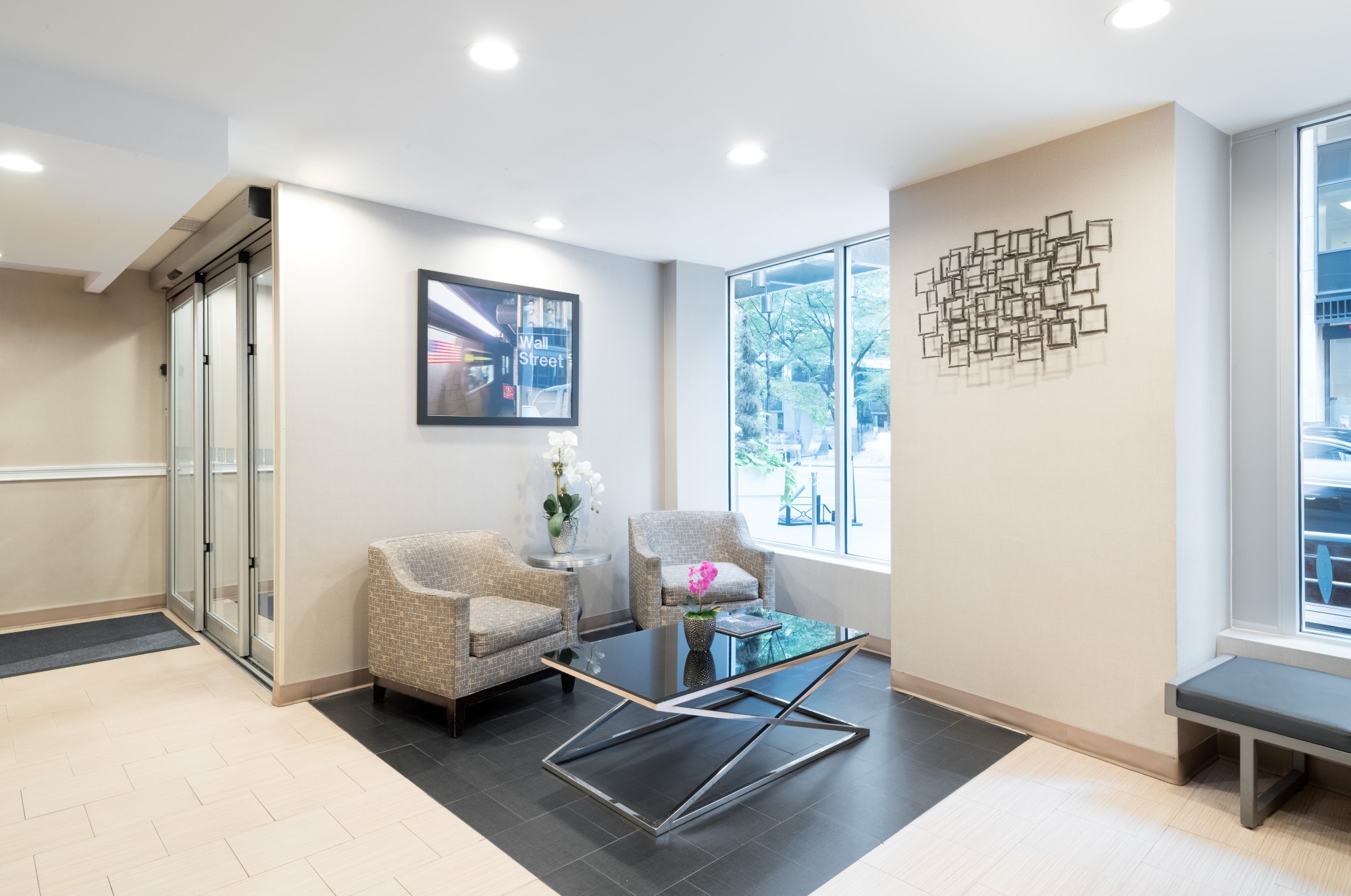
Hospitality operators situated along this historic waterfront perimeter are organizing their services to act as practical base camps for value-conscious family networks. The Holiday Inn Express New York City-Wall Street functions as an empirical case of a lodging asset structured to support these changing multi-generational movement patterns. Tucked onto Water Street just a two-minute pedestrian path from the South Street Seaport, the hotel provides a peaceful neighborhood environment on weekends when the financial core naturally slows down. The property’s standard brand inclusions explicitly address family budget pressures; by providing a complimentary hot Express Start™ breakfast bar, the hotel lets parents fuel up the entire squad instantly before hitting the pavement, completely eliminating the dreaded $80 baseline diner bill before their day even begins.
Technical Property Blueprint
The architectural framework of the Holiday Inn Express New York City-Wall Street comprises a sleek, 27-story urban high-rise structural design originally constructed in 2009 and systematically refreshed via a comprehensive property-wide interior renovation in 2017. The high-rise asset houses a total inventory of 112 non-smoking, acoustic-insulated guest rooms engineered to provide a secure and quiet base camp for group family travel blocks:
– Room Inventory Configurations: Distributed across Standard King Rooms, Standard Queen Rooms, and Double Rooms featuring two full-sized beds measuring up to 283 square feet, built to comfortably accommodate multi-person family blocks.
– In-Room Functional Assets: Every individual guest unit is standardly configured with a 50-inch flat-screen Smart TV with premium digital cable, a mini-refrigerator, a dedicated work desk with task lighting, an in-room safety deposit box, coffee and tea makers, black-out drapes, and a signature triple-sheeted bed array.
– On-Site Operational Framework: Features a 24-hour staffed reception desk, concierge services, express check-in/check-out options, and free high-speed wireless internet routing throughout all public and private zones. Wellness & Dining Infrastructure: Encompasses a fully equipped on-site fitness center outfitted with contemporary cardiovascular training machinery and the complimentary daily Express Start™ hot breakfast bar featuring the brand’s signature hot cinnamon rolls and fresh morning entrees.
Laurean Love
HHM Hotels
+1 215-238-1046
email us here
Visit us on social media:
LinkedIn
Other
Legal Disclaimer:
EIN Presswire provides this news content “as is” without warranty of any kind. We do not accept any responsibility or liability
for the accuracy, content, images, videos, licenses, completeness, legality, or reliability of the information contained in this
article. If you have any complaints or copyright issues related to this article, kindly contact the author above.

Media gallery