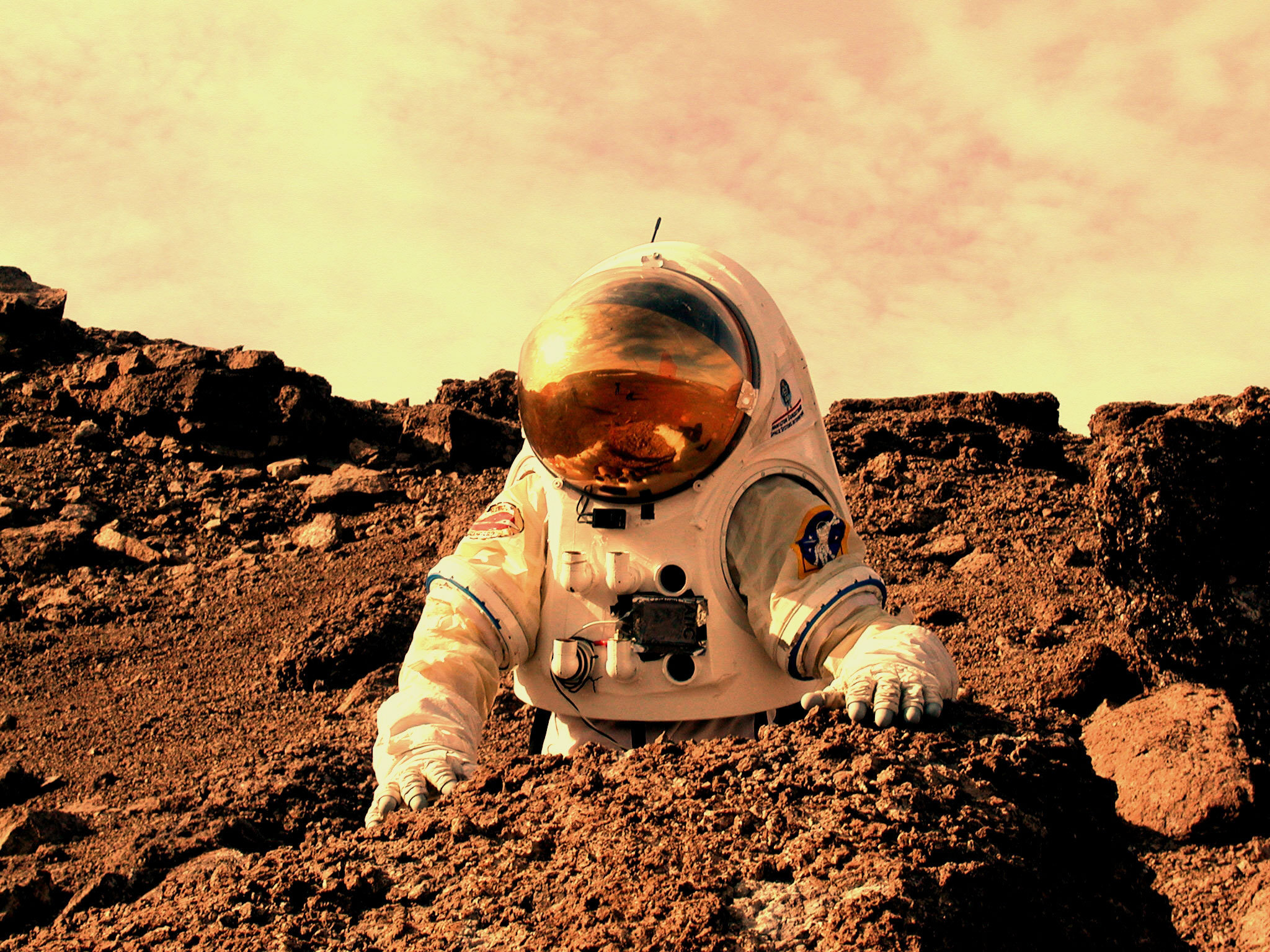
Aexa Aerospace® and SpacePort Australia® Work together to create the world’s first deductive medical AI
to support space exploration.
HOUSTON, TX, UNITED STATES, April 28, 2026 /EINPresswire.com/ — Aexa Aerospace® and SpacePort Australia® Work together to create the world’s first deductive medical AI
to support space exploration.
Aexa Aerospace®, a leader in AI and holographic technology based in Houston, Texas; and SpacePort Australia® (SPA) is an independent research organization located in Moree, Northern New South Wales, Australia. They have formalized a joint venture ‘The Hamilton Project’.
This strategic partnership will complete training and refinement of a deductive medical AI model, designed to assist, support and treat spacecraft and station crew. Dr Gabrielle Caswell stated, “There is an evolving role offering medical support for recreational space travellers, space tourists, as well as contribute to the maintenance of crew health on Exploration Class Space Missions (ECSM), and future extraterrestrial colonies”.
Dr Feranando De La Peña Llaca, founder and CEO of Aexa Aerospace®, has created holographic medical devices allowing doctors to examine ‘patients’ remotely, these have been trialled on the International Space Station (ISS). This collaboration expands this technology, and brings together Aexa Aerospace’s® superior AI and holographic technology, with SPA’s team’s practical medical knowledge and clinical experience.
The isolation and limited resource scenario is often encountered in Australia’s remote townships and outback. To prepared doctors, Australia has created unique rural and remote medical training programs, which are ideal space medicine preparation, paralleling anticipated clinical challenges expected to be encountered in the space environment. Dr Caswell’s remote experience will contribute over 20 years of remote, isolated and rural medicinal skill base, on land and water.
Explaining the difference in training, Dr Caswell advised, “Rural general practitioners (family physicians) in Australia practice ‘pre-cradle to grave’ medicine. Including areas considered sub-specialities in most western countries: OBYN, paediatrics, trauma management, anaesthetics, general surgery, mental health and geriatrics,” continuing she added, “This broad clinical skill set, encompasses all stages and phases of human life. And importantly practitioners are also trained in the management of severe trauma. It is anticipated that doctors and medical staff will become embedded into missions, and all these skills will be required over time, to create successful space economic zones.”
The Hamilton Project is named after NASA luminary and operational flight surgeon Dr Douglas Hamilton, Clinical Associate Professor Medicine andAdjunct Professor Electrical Engineering. Dr Hamilton has completed 50 missions, and continues to practice as an internist, in Calvary, Alberta, Canada. He maintains his engineering skills, and is the only person known to have certified on all launch consoles at NASA (available at time). Dr Hamilton contributes immense operational space medicine experience, history and mission knowledge.
Ever mindful space sciences are becoming intergenerational projects; Dr Mina Arsanious (United Kingdom) and Dr Mark Biernacki (Canada) have been recruited as project managers, to become familiar with The Hamilton Project, whilst helping manage the international clinical contributions. Dr Caswell says, “Remote space medicine, will, due to the tyranny of distance, require knowledge of pharmaceuticals, botanicals and perhaps novel alternatives (to western medicine) for treatment of different conditions. The space environment is so radically different from Earth; we are attempting to provide creative clinical flexibility for physicians, as we do not truly know what may eventuate.” Dr Caswell reflected that all the human niggles and complaints, respiratory infections and in-grown toenails, will be experienced in space; along with all the insults of radiation and microgravity.
SPA has completed prodigious mathematical modelling and work concerning the clinical understanding of the human microbiome, and effects of space travel. She continued, “There will be changes to the microbiome, nutrition creating a downstream physiological impact on general fitness, which of course contributes to a group’s social stability and psychological wellness.”
Dr Feranando De La Peña Llaca said, “The Hamilton Project” is a sophisticated AI model, integrating academic and clinical knowledge in a unique way. It is paving the way for future autonomous attending.” He continued, the concept of creating The Star Trek doctor had excited all of his team, who took into account the present technology, the possibilities and potentialities.
Find out more about Aexa Aerospace® https://aexa.com/
Find out more about SpacePort Australia® www.spaceportaustralia.com.au
Find out more about The Hamilton Project® www.thehamiltonproject.space
END
###
More information:
Dr Feranando De La Peña Llaca: contact@aexa.com
Dr Gabrielle M Caswell, SpacePort Australia: contact@spaceportaustralia.com.au
Gabrielle Caswell
SpacePort Australia
+61 455 321 174
email us here
Visit us on social media:
LinkedIn
Other
Legal Disclaimer:
EIN Presswire provides this news content “as is” without warranty of any kind. We do not accept any responsibility or liability
for the accuracy, content, images, videos, licenses, completeness, legality, or reliability of the information contained in this
article. If you have any complaints or copyright issues related to this article, kindly contact the author above.

Media gallery