
QINHUANGDAO, HEBEI, CHINA, November 23, 2026 /EINPresswire.com/ —
As industrial facilities, infrastructure projects, and commercial construction developments continue to expand, the demand for dependable cable management systems is becoming increasingly important. Cable trays play a critical role in organizing, supporting, and protecting electrical cables across a wide range of applications. Against this background, Hebei Fluent Electrical Equipment Group Co., Ltd. is gaining attention as a manufacturer in the electrical equipment and composite materials sector. With an emphasis on fiberglass-reinforced products and corrosion-resistant solutions, the company represents an industry participant serving applications where material durability, structural reliability, and long-term performance are essential considerations.
The Growing Importance of Cable Tray Systems in Modern Infrastructure
Cable management is an important part of modern electrical engineering. Industrial plants, commercial buildings, power distribution facilities, transportation infrastructure, and telecommunications installations all require organized systems for routing electrical cables. As the scale and complexity of these projects increase, the selection of suitable cable support structures becomes a significant consideration for engineers, contractors, and procurement professionals.
Cable trays provide a practical framework for supporting electrical cables along designated routes. Compared with less organized installation methods, properly designed cable tray systems can simplify cable arrangement, improve accessibility, and make future maintenance more manageable. They also help establish a structured layout for electrical installations, reducing unnecessary cable congestion and supporting more efficient project management.
However, not every installation environment presents the same technical requirements. Indoor commercial buildings may prioritize appearance, installation flexibility, and accessibility, while industrial facilities may require stronger resistance to moisture, chemicals, temperature fluctuations, and other environmental conditions. Coastal infrastructure and chemical processing facilities can present particularly demanding operating environments.
These differences have encouraged manufacturers to develop cable management products using various materials, including carbon steel, stainless steel, aluminum, and fiberglass-reinforced plastics. Among these options, fiberglass composites have attracted attention because of their combination of corrosion resistance, electrical insulation characteristics, and relatively low weight.
Material Selection Becomes a Key Factor in Cable Tray Manufacturing
Material selection directly influences the service performance of cable tray systems. Traditional metallic cable trays remain widely used because of their mechanical strength and established manufacturing processes. Nevertheless, metallic products may require additional protective treatments when installed in environments where moisture, salt, chemicals, or corrosive substances are present.
Fiberglass-reinforced plastic, commonly known as FRP, offers an alternative for applications where corrosion resistance is a major concern. Manufactured by combining reinforcing glass fibers with resin systems, FRP materials can provide a balance of mechanical performance and environmental durability.
One of the principal advantages of fiberglass composites is their resistance to many corrosive substances. Depending on the resin formulation and manufacturing process, these materials can be suitable for installations exposed to humidity, industrial chemicals, and certain aggressive atmospheric conditions. This characteristic makes them relevant to industries such as chemical processing, wastewater treatment, marine engineering, and power generation.
Another important feature is electrical insulation. Unlike conventional metallic materials, fiberglass-reinforced plastics are nonconductive under normal operating conditions. This property can offer additional design advantages in electrical infrastructure, although appropriate grounding, bonding, and electrical safety requirements must still be evaluated according to the installation design.
Weight is another consideration. FRP components are generally lighter than comparable steel structures, potentially reducing transportation and handling requirements. For installation teams working across large industrial facilities, lighter components can contribute to more convenient handling and assembly.
Hebei Fluent Electrical Equipment Group Co., Ltd. and Its Product Development Focus
Within this changing industrial landscape, Hebei Fluent Electrical Equipment Group Co., Ltd. is associated with fiberglass-reinforced products and corrosion-resistant profiles. These product categories reflect the broader demand for composite materials that can support infrastructure projects requiring reliable performance under challenging environmental conditions.
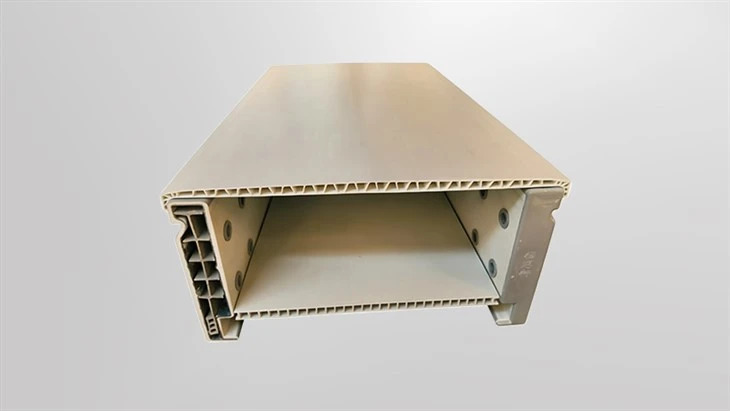
The company’s Fiberglass Reinforced Plastic Products represent an important product category within the composite materials sector. Fiberglass-reinforced plastics are used in a variety of industrial applications because their material characteristics can be adapted through different combinations of glass fiber reinforcement, resin systems, and production methods.
For cable management applications, these characteristics are particularly relevant. Cable tray structures must provide adequate support for installed cables while maintaining dimensional stability throughout their service life. The selection of appropriate materials can influence load-bearing performance, resistance to environmental exposure, installation requirements, and maintenance considerations.
The application of FRP materials also extends beyond cable trays. Depending on product configuration, fiberglass composites can be used in structural supports, industrial components, equipment platforms, and other infrastructure-related products. This versatility makes fiberglass-reinforced materials an important category for manufacturers serving multiple industrial sectors.
Another product category associated with Hebei Fluent Electrical Equipment Group Co., Ltd. is Corrosion Resistant Profiles. Corrosion resistance is an essential consideration in industrial engineering, particularly where structural components are exposed to moisture, chemical substances, or outdoor environmental conditions.
Profiles manufactured from suitable composite materials can provide structural solutions for projects where conventional metal components may require frequent protective treatment or replacement. Their potential applications include support structures, industrial frameworks, equipment installations, and other environments where resistance to corrosion is an important material requirement.
By covering both Fiberglass Reinforced Plastic Products and Corrosion Resistant Profiles, the company’s product categories correspond with broader industrial interest in composite materials and their potential applications in infrastructure engineering.
FRP Cable Trays Offer Advantages in Challenging Environments
The development of FRP cable tray systems has created additional options for electrical contractors and industrial project designers. In environments where conventional metal cable trays face corrosion-related challenges, fiberglass alternatives may provide practical advantages.
Chemical manufacturing facilities are one example. These facilities frequently contain processing equipment, pipelines, storage systems, and electrical installations operating in environments where chemical exposure must be considered. Selecting materials with appropriate chemical resistance can help reduce deterioration and support the long-term reliability of infrastructure components.
Wastewater treatment plants represent another potential application. High humidity, water exposure, and certain chemical substances can create demanding conditions for electrical support systems. Fiberglass-reinforced cable trays may offer a suitable alternative when their material specifications are matched to the actual operating environment.
Coastal and marine-related projects also require careful consideration of corrosion. Salt-containing air and moisture can accelerate the deterioration of many conventional metal materials. In these circumstances, FRP cable management products may help address specific environmental challenges.
Power generation facilities, substations, and industrial utility installations can also benefit from carefully selected cable support materials. Electrical infrastructure often contains extensive cable networks connecting control systems, monitoring equipment, distribution panels, and operational machinery. Reliable cable organization is therefore important for both installation efficiency and ongoing maintenance.
Nevertheless, the suitability of an FRP cable tray should always be assessed according to project-specific requirements. Load capacity, span distance, temperature range, fire performance, UV exposure, chemical compatibility, and applicable industry standards all require attention before product selection.
Manufacturing Quality and Engineering Considerations
For cable tray manufacturers, product quality involves more than selecting an appropriate raw material. Manufacturing consistency, dimensional accuracy, structural design, and quality inspection all contribute to the performance of the finished product.
In fiberglass pultrusion manufacturing, reinforcing fibers are drawn through a resin bath and then shaped through a heated forming die. This process can produce profiles with consistent cross-sectional dimensions and continuous fiber reinforcement. It is widely used for manufacturing structural composite components.
Molding processes provide another production approach, allowing manufacturers to produce components with different shapes and configurations. The appropriate process depends on the intended application, product geometry, material requirements, and production volume.
For FRP cable tray systems, dimensional consistency is important because individual sections and accessories must fit together during installation. Connections, bends, supports, covers, and other components need to work as part of an integrated system.
Mechanical performance is equally important. Cable trays must be selected according to the anticipated cable weight, support spacing, installation conditions, and applicable safety requirements. Engineers should review load tables and technical documentation rather than relying exclusively on general material descriptions.
Quality control can include dimensional inspections, visual examinations, mechanical testing, and verification of material characteristics. For projects involving specialized industrial environments, additional testing may be necessary to evaluate chemical resistance, fire behavior, and environmental durability.
Manufacturers that maintain consistent production procedures and provide appropriate technical information can help customers make more informed purchasing decisions. These factors are relevant to both domestic infrastructure projects and international procurement activities.
The Role of Corrosion-Resistant Profiles in Industrial Applications
Beyond cable tray systems, corrosion-resistant profiles have become increasingly relevant to industrial construction and equipment manufacturing. Many facilities require structural components capable of maintaining their performance under environmental conditions that can accelerate the deterioration of conventional materials.
Fiberglass profiles can be manufactured in different shapes and dimensions to meet specific structural requirements. Depending on their design and material composition, they may be used for support frameworks, equipment structures, walkways, handrails, and other industrial components.
Their relatively low weight can simplify transportation and handling, while their corrosion-resistant characteristics may reduce the need for certain protective coatings. In applications where maintenance access is difficult or replacement costs are high, these considerations can influence material selection.
For industrial operators, the total cost of ownership is often more important than the initial purchase price. A material that offers a suitable combination of durability, maintenance requirements, and installation efficiency may provide long-term economic benefits.
However, composite materials also require appropriate engineering evaluation. Their mechanical properties differ from those of metals, and factors such as fiber orientation, resin selection, temperature exposure, and structural loading can affect performance. Designers must therefore ensure that profiles are selected and installed according to the relevant technical specifications.
Hebei Fluent Electrical Equipment Group Co., Ltd.’s Corrosion Resistant Profiles belong to this broader category of composite engineering products, addressing an area of interest for industries seeking alternatives to conventional materials.
Changing Procurement Priorities in the Global Cable Management Market
The international market for cable management equipment is influenced by several interconnected developments. Industrial automation, renewable energy projects, infrastructure modernization, and the expansion of manufacturing facilities are all contributing to the continued importance of organized electrical installations.
As projects become more technically demanding, procurement teams increasingly evaluate suppliers according to multiple factors. Product quality, material performance, manufacturing capacity, delivery arrangements, technical communication, and after-sales support can all influence purchasing decisions.
Material versatility is also becoming an important consideration. Instead of relying on a single material across every application, project developers are increasingly evaluating the operating environment and selecting products according to specific engineering requirements.
This approach creates opportunities for manufacturers working with fiberglass-reinforced plastics and other specialized materials. FRP products can serve applications where corrosion resistance, electrical insulation, and reduced structural weight are relevant advantages.
For international buyers, clear technical documentation is particularly important. Information about dimensions, material composition, mechanical properties, installation methods, and applicable standards helps procurement professionals determine whether a product is suitable for a particular project.
Manufacturers that can communicate these details effectively are better positioned to support cooperation with engineering companies, distributors, contractors, and industrial equipment purchasers.
Looking Ahead: The Future of Composite Cable Management Solutions
The development of industrial cable management systems is likely to remain closely connected to wider changes in construction technology and material engineering. As electrical networks become more extensive and industrial facilities adopt increasingly sophisticated automation systems, reliable cable support infrastructure will continue to play an important role.
Composite materials are expected to remain part of this development, particularly in applications where conventional metallic materials face environmental limitations. Improvements in resin technology, fiber reinforcement, manufacturing automation, and product design may further expand the range of applications available to FRP components.
Sustainability is another consideration influencing material development. Manufacturers and project owners are paying greater attention to product service life, maintenance requirements, material efficiency, and end-of-life management. Composite materials must be evaluated within this broader framework, including their production processes and recycling possibilities.
For manufacturers such as Hebei Fluent Electrical Equipment Group Co., Ltd., the continued development of fiberglass-reinforced products and corrosion-resistant profiles provides opportunities to participate in evolving industrial supply chains.
As demand for dependable electrical infrastructure continues, manufacturers that combine suitable material selection with consistent production quality and application-oriented product development will remain relevant to the cable management industry.
Conclusion
Cable trays are essential components of modern electrical infrastructure, and their performance depends on appropriate material selection, structural design, and manufacturing quality. While traditional metallic systems continue to serve many applications, fiberglass-reinforced alternatives offer additional possibilities for installations where corrosion resistance, electrical insulation, and reduced weight are important considerations.
Hebei Fluent Electrical Equipment Group Co., Ltd. is associated with the development and supply of fiberglass-reinforced plastic products and corrosion-resistant profiles, two product categories that align with the growing industrial interest in composite engineering materials. As infrastructure projects become more specialized and operating environments increasingly demanding, these materials may provide valuable solutions for selected cable management and industrial applications.
Company Profile: Hebei Fluent Electrical Equipment Group Co., Ltd.
Hebei Fluent Electrical Equipment Group Co., Ltd. is a Chinese industrial equipment and composite materials company focusing on fiberglass-reinforced products and related industrial solutions. Its product categories include Fiberglass Reinforced Plastic Products and Corrosion Resistant Profiles, which serve applications where material durability, structural performance, and resistance to environmental exposure are important considerations.
Through its involvement in the composite materials sector, the company participates in an industrial market serving customers with requirements for specialized materials and infrastructure components. Its product portfolio reflects the growing application of fiberglass-reinforced plastics in electrical engineering, industrial construction, and other demanding operating environments.
For further information about the company’s products, business activities, and available solutions, interested customers can visit its official website at www.cnfluent.com.
Address: No.9 Yongdinghe Road, Qinhuangdao Economic & Technological Development Zone, Qinhuangdao City, Hebei Province, P.R.China
Official Website: https://www.cnfluent.com/
ZiYao Dang
Hebei Fluent Electrical Equipment Group Co., Ltd.
contact@cnfluent.com
Legal Disclaimer:
EIN Presswire provides this news content “as is” without warranty of any kind. We do not accept any responsibility or liability
for the accuracy, content, images, videos, licenses, completeness, legality, or reliability of the information contained in this
article. If you have any complaints or copyright issues related to this article, kindly contact the author above.

Media gallery